

“Born into an army family in India in 1907, Helen Muspratt was a lifelong communist, a member of the Cambridge intellectual milieu of the 1930s, and a working mother at a time when such a role was unusual for women of her class. She was also a pioneering photographer, creating an extraordinary body of work in many different styles and genres. In partnership with Lettice Ramsey she made portraits of many notable figures of the 1930s in the fields of science and culture and she became one of the most eminent portrait photographers of the twentieth century.
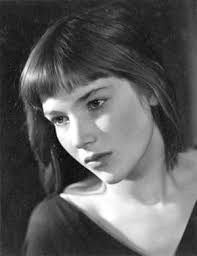
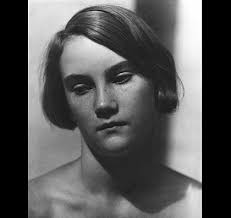
Her experimental photography using techniques such as solarisation and multiple exposure bears comparison with the innovations of Man Ray and Lee Miller, while her political convictions led her to produce important documentary records of the Soviet Union and the desperate situation of the unemployed in the Welsh Valleys. Critical to her work was a preoccupation with the face – her attention to the ‘shape and angle’ of the head lies at the root of all her work.
This book reproduces some of Helen Muspratt’s most important photographic images. The accompanying text by Jessica Sutcliffe is an intimate and revealing memoir of her mother, which offers a fascinating insight into her life, work and politics.
A new Bodleian exhibition Helen Muspratt Photographer, marks the recent and important gift of the Helen Muspratt photographic archive to the Bodleian Libraries, including over 500 original prints and surviving negatives. The exhibition of this work explores an extraordinary body of work in many different styles and genres from experimental photography using techniques such as solarisation, to social documentary and studio portraiture.
ISBN 9781526100849″

About the exhibition
The pioneering photographer, Helen Muspratt (1907–2001) produced some of the most astonishing images of the twentieth century.
This forthcoming exhibition explores an extraordinary body of work in many different styles and genres from experimental photography using techniques such as solarisation, to social documentary and studio portraiture.
In the late 1930s Muspratt opened a studio in Oxford where she became established as a remarkable portrait photographer. Critical to all her work was her preoccupation with the face – its ‘shape and angle’ – and she became an eminent portrait photographer
recording some of the leading figures of the twentieth century.
This exhibition marks the recent and important gift of the Helen Muspratt photographic archive to the Bodleian Libraries, including over 2,000 original prints and numerous surviving negatives. This retrospective forms part of Photo Oxford Festival 2020, the theme for which is Women and Photography and coincides with the centenary of the first woman matriculating and graduating from the University of Oxford.
Reflection
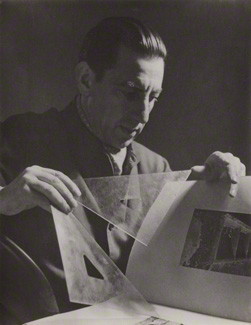
An interesting exhibition, slightly small, but with a selection of panels highlighting different dimensions to Muspratt’s life and work. Encouraged to establish a studio in Swanage, the studio itself and her logo were designed by the retired Head of the Glasgow School of Art who had retired there. He also encouraged her to study at the Regent School of Art in London.
Her portraits were shot with a TLR mounted on a tripod for adults, and around her neck for children. She had a maxim of never taking more than one roll of 12 shots per sitter, and at weddings gave herself 4 minutes to capture external shots to avoid inconveniencing the rest of the event.
The portraits are in a consistent style, with a dark background, strong lateral light, and with the model looking away from the photographer.
REF: https://helenmuspratt-photographer.com/life/biography/