Categories
MY PHOTO JOURNEY Sophistication (Mastery)

The impact of their childhood on a street photographer’s work

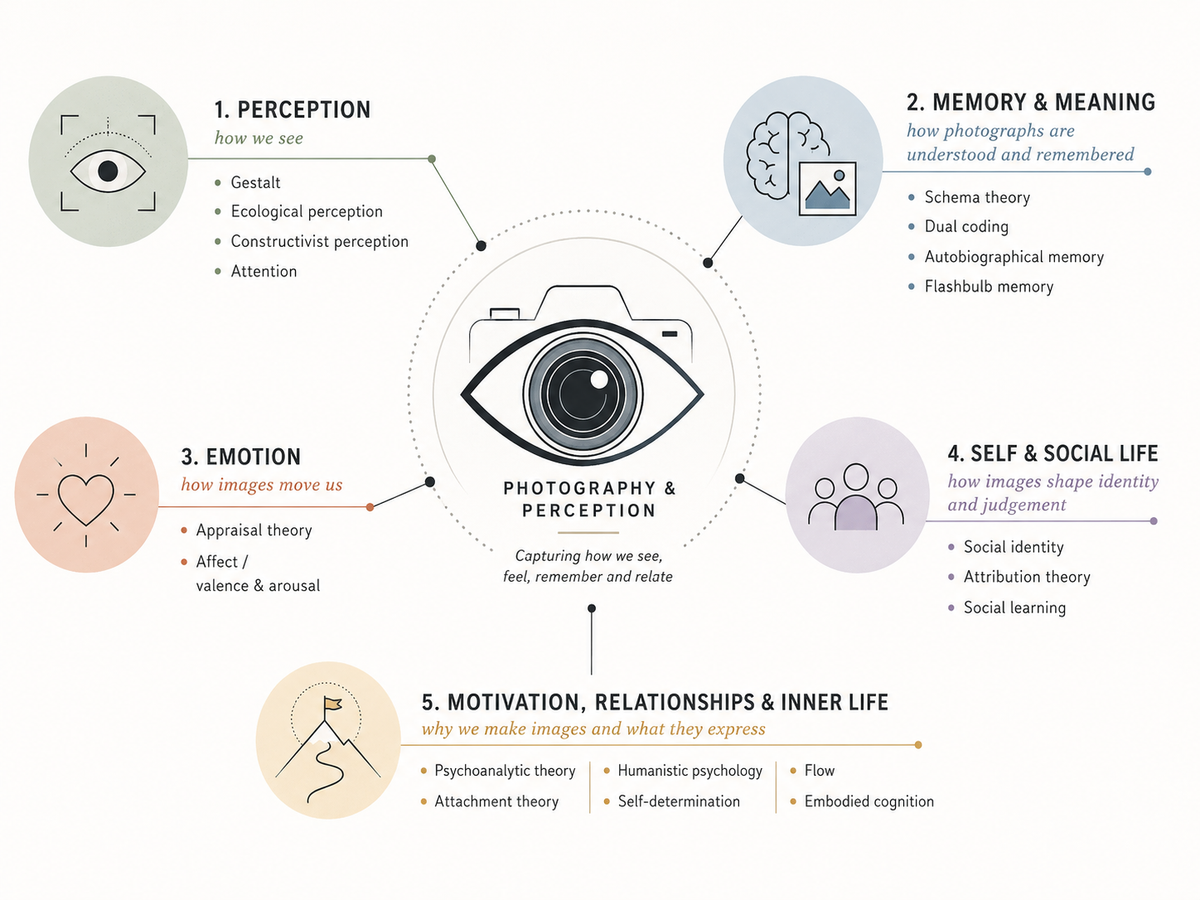
Attachment styles, which originate from early relational experiences, significantly influence how individuals perceive and engage with their environment. This is particularly relevant for street photographers, whose artistic practice hinges on acute observation of social dynamics and environmental contexts. Research indicates that attachment styles can shape not only what individuals notice but also how they interpret and frame their observations (Dereli & Karakuş, 2017; Guerrero & Jones, 2005), thus impacting their creative expression in photography.

Individuals with secure attachment styles typically approach their surroundings with a sense of safety and curiosity, which enhances their observational skills. Securely attached individuals are characterized by emotional stability, allowing them to focus on the nuances of their environment without the distractions of anxiety or defensiveness. This emotional security fosters a relational sensitivity that might enable them to capture intimate moments and harmonious interactions in their photography (Malekzadeh et al., 2020; Mardani et al., 2021).

Conversely, those with anxious attachment styles may exhibit hyper-vigilance in their observations. Anxiously attached individuals often display heightened sensitivity to social cues, which can lead to an intense focus on emotional expressions and interpersonal tensions in their photographic work. This hyper-attunement may result in images that convey drama and raw emotion, reflecting their internal anxieties and the need to process their emotional experiences through their art (Mohammadi et al., 2016; Huang et al., 2020). However, this same sensitivity can also hinder their ability to observe with detachment , complicating their creative process.

Photographers with avoidant attachment styles may adopt a different observational approach, often emphasizing structural or abstract elements over human connections. Their preference for independence and emotional withdrawal can lead to a focus on isolation and minimalism in their work, highlighting details that others might overlook. While this detachment can provide a unique perspective, it may also limit their capacity to capture the relational depth often associated with humanistic photography (Simmons et al., 2009; Tang, 2024).

Disorganized attachment, often linked to trauma, results in a fragmented approach to observation. Individuals with this attachment style may find their attention scattered, leading to eclectic or chaotic photographic compositions that juxtapose conflicting elements. While this can yield powerful and unconventional work, it may also challenge the photographer’s ability to maintain a coherent artistic vision (Takahashi et al., 2013; Khan, 2024). The unpredictability associated with disorganized attachment can complicate the street photographer’s experience in dynamic environments, potentially affecting their overall creative output.

A street photographer’s attachment style can therefore profoundly inform their perception and interpretation of the world around them. This underscores the deeply personal nature of photographic practice, where the camera serves as a medium for expressing attachment patterns, emotional tendencies, and personal narratives. Understanding this interplay can provide photographers with valuable insights into their creative processes and thereby the unique stories they convey through their work (Ptiček et al., 2021; Rasmussen et al., 2018).

References

Dereli, E., & Karakuş, Ö. (2017). An Examination of Attachment Styles and Social Skills of University Students. Electronic Journal of Research in Educational Psychology, 9(24), 731–744. https://doi.org/10.25115/ejrep.v9i24.1464

Guerrero, L. K., & Jones, S. M. (2005). Differences in Conversational Skills as a Function of Attachment Style: A Follow-Up Study. Communication Quarterly, 53(3), 305–321. https://doi.org/10.1080/01463370500101014

Huang, C.-Y., Sirikantraporn, S., Pichayayothin, N., & Turner‐Cobb, J. M. (2020). Parental Attachment, Adult-Child Romantic Attachment, and Marital Satisfaction: An Examination of Cultural Context in Taiwanese and Thai Heterosexual Couples. International Journal of Environmental Research and Public Health, 17(3), 692. https://doi.org/10.3390/ijerph17030692

Khan, F. (2024). Effect of Attachment Style on Emotional Regulation and Psychological Wellbeing Among Adults. Aijmr, 2(3). https://doi.org/10.62127/aijmr.2024.v02i03.1046

Little, L. M., Nelson, D. L., Wallace, J. C., & Johnson, P. D. (2011). Integrating Attachment Style, Vigor at Work, and Extra‐role Performance. Journal of Organizational Behavior, 32(3), 464–484. https://doi.org/10.1002/job.709

Malekzadeh, A., Namvar, H., & Jomehri, F. (2020). Predicting Social Skills in Single Child Adolescents Based on Attachment Styles and Creativity: The Mediating Role of Moral Intelligence. Iranian Journal of Educational Sociology, 3(2), 1–10. https://doi.org/10.52547/ijes.3.2.1

Mardani, M., Marashi, S. A., & Abbaspour, Z. (2021). On the Causal Relationship Between Attachment Styles and Marital Satisfaction: Mediating Role of Gottman’s Marital Communication Model. Iranian Journal of Psychiatry and Behavioral Sciences, 15(2). https://doi.org/10.5812/ijpbs.108339

Mohammadi, K., Samavi, S. A., & Ghazavi, Z. (2016). The Relationship Between Attachment Styles and Lifestyle With Marital Satisfaction. Iranian Red Crescent Medical Journal, 18(4). https://doi.org/10.5812/ircmj.23839

Ptiček, P., Žganjar, I., Mikota, M., & Matijević, M. (2021). Technical Aspects of Web Photography as a Medium of Tourism Development. Tehnički Glasnik, 15(4), 467–474. https://doi.org/10.31803/tg-20210506103212

Rasmussen, P. D., Storebø, O. J., Løkkeholt, T., Voss, L. G., Shmueli-Goetz, Y., Bojesen, A. B., Simonsen, E., & Bilenberg, N. (2018). Attachment as a Core Feature of Resilience: A Systematic Review and Meta-Analysis. Psychological Reports, 122(4), 1259–1296. https://doi.org/10.1177/0033294118785577

Simmons, B. L., Gooty, J., Nelson, D. L., & Little, L. M. (2009). Secure Attachment: Implications for Hope, Trust, Burnout, and Performance. Journal of Organizational Behavior, 30(2), 233–247. https://doi.org/10.1002/job.585

Takahashi, J., Tamaki, K., & Yamawaki, N. (2013). Autism Spectrum, Attachment Styles, and Social Skills in University Student. Creative Education, 04(08), 514–520. https://doi.org/10.4236/ce.2013.48075

Tang, X. (2024). The Effects of Attachment Styles on Resilience and Emotion Regulation. Journal of Education Humanities and Social Sciences, 26, 755–759. https://doi.org/10.54097/shp3g660

Categories
MY PHOTO JOURNEY Sophistication (Mastery)

An introduction to minimalist street photography

Minimalist street photography is a genre that thrives on simplicity. It draws attention to the beauty of urban spaces by stripping away distractions and focusing on clean compositions, isolated subjects, and well-balanced elements. This approach transforms bustling cityscapes into serene visual stories, highlighting details often overlooked in the chaos of daily life. By focusing on fewer elements, minimalist street photography invites viewers to engage deeply with the subtle interplay between light, shadow, colour, and form.

The Essence of Minimalism

Minimalism as an aesthetic principle aims to distil art to its essential components. In photography, this means reducing a scene to its bare essentials while maintaining emotional or visual impact. Minimalist street photography applies this principle to urban settings, where clutter and complexity often dominate. Photographers in this genre strive to frame scenes that convey meaning through restraint, using negative space, geometric shapes, and carefully chosen subjects to create striking images.

This genre’s hallmark is its ability to evoke emotion and tell stories with minimal elements. A lone figure walking across an expansive concrete plaza, a single window on a vast wall, or a shadow cutting sharply across a street can all evoke narratives of isolation, simplicity, or the beauty of human design.

Key Characteristics

  1. Negative Space: Negative space refers to the empty or unoccupied areas in a photograph. In minimalist street photography, it is often used to draw attention to the subject, creating a sense of balance and focus. Large expanses of sky, walls, or streets provide a visual pause, encouraging the viewer to linger.
  2. Clean Compositions: A clean composition ensures that every element within the frame serves a purpose. Photographers often avoid visual clutter by carefully selecting angles and cropping extraneous details.
  3. Geometry and Patterns: Urban landscapes are rich with geometric forms, lines, and patterns. Minimalist street photography frequently leverages these elements to create visually engaging compositions.
  4. Isolated Subjects: A solitary person or object often anchors minimalist street images. This isolation emphasises the subject’s significance and can evoke a sense of loneliness, contemplation, or focus.
  5. Light and Shadow: Light is a critical element in all photography, but in minimalism, its role becomes even more pronounced. Sharp contrasts between light and shadow can transform mundane urban scenes into abstract works of art.
  6. Colour (or Lack Thereof): While many minimalist photographers prefer black and white for its stark simplicity, others use colour sparingly to emphasise specific details. A red umbrella in an otherwise monochrome scene can become a powerful focal point.

Techniques and Approaches

To master minimalist street photography, one must develop both a keen eye and a disciplined approach to composition. Here are some techniques to consider:

1. Observation and Patience

Minimalist photography requires a slower pace and heightened awareness. In busy urban environments, spotting simplicity demands patience. Waiting for the right moment—such as a passerby entering a perfectly framed doorway or a cloud casting an ideal shadow—is often key to capturing impactful shots.

2. Framing and Cropping

Careful framing is essential in minimalism. Look for scenes that naturally isolate subjects or create harmony through negative space. Cropping in post-processing can also help refine the composition, removing unnecessary distractions.

3. Shooting Against Neutral Backgrounds

Walls, pavements, and open skies provide excellent neutral backgrounds. These surfaces allow the subject to stand out, creating a sense of simplicity and focus.

4. Emphasising Light and Shadow

The interplay of light and shadow can simplify complex urban scenes. Look for strong directional light that creates clear contrasts. Early morning or late afternoon—the golden hours—often provide ideal lighting conditions.

5. Using Negative Space

Don’t be afraid to leave large areas of the frame empty. Negative space can enhance the overall mood, making the viewer’s eye gravitate toward the subject and imbuing the image with a sense of calm or mystery.

Equipment and Settings

Minimalist street photography doesn’t demand specialised equipment, but thoughtful choices can enhance results:

  1. Camera: Any camera, from a smartphone to a DSLR, can work for minimalist photography. The key lies in how you frame and compose your shots.
  2. Lenses: Prime lenses with fixed focal lengths, such as 35mm or 50mm, encourage you to move and engage with the scene. Wide-angle lenses can capture expansive negative spaces, while telephoto lenses can isolate subjects from the background.
  3. Settings: Use aperture priority or manual mode to control depth of field. A narrower aperture (higher f-number) can keep the entire frame sharp, highlighting the interplay of light and geometry. In low-light conditions, increase ISO settings to maintain proper exposure.
  4. Filters: Polarising filters can help reduce glare on reflective surfaces, while neutral density filters enable long exposures in bright conditions.

Inspiration and Influences

Minimalist street photography draws inspiration from a range of artistic movements and genres:

  • Minimalist Art: Pioneers like Donald Judd and Agnes Martin used simplicity and repetition to create impactful works.
  • Architectural Photography: The clean lines and geometric patterns of architecture often inform minimalist compositions.
  • Documentary Photography: Photographers such as Fan Ho and Saul Leiter infused minimalist elements into their work, capturing quiet moments in busy urban landscapes.
  • Japanese Aesthetics: Concepts like “ma” (negative space) and “wabi-sabi” (finding beauty in imperfection) align closely with minimalist principles.

Challenges and Rewards

Minimalist street photography can be deceptively difficult. The busy nature of urban environments often works against simplicity. Finding clean compositions requires patience and a discerning eye. Moreover, the absence of visual complexity places greater emphasis on the few elements within the frame, demanding technical precision and compositional skill.

However, the rewards are substantial. Minimalist images possess a timeless quality, allowing viewers to find beauty in simplicity. They can evoke a range of emotions, from solitude and introspection to clarity and calm.

Practical Exercises

If you want to experiment with minimalist street photography, try these exercises:

  1. Restrict Yourself to One Subject: Spend an hour photographing only solitary subjects, such as a single figure, a lone lamppost, or a parked bicycle.
  2. Focus on Negative Space: Capture scenes where at least 50% of the frame is empty space.
  3. Experiment with Shadows: Look for strong light sources that create sharp, dramatic shadows. Use these to frame or highlight your subjects.
  4. Use a Single Colour: Compose images that feature a single dominant colour, either in the subject or the background.
  5. Simplify Busy Scenes: Stand in a crowded area and try to isolate clean compositions within the chaos. Use walls, fences, or light and shadow to simplify your frame.

Conclusion

Minimalist street photography offers a refreshing way to see and interpret urban life. It challenges photographers to find beauty in simplicity and to tell compelling stories with minimal elements. By mastering this genre, you can transform everyday scenes into powerful, timeless works of art. The discipline it requires will not only improve your technical skills but also deepen your appreciation for the subtleties of light, space, and form in the world around you.

Bibliography

TBC