
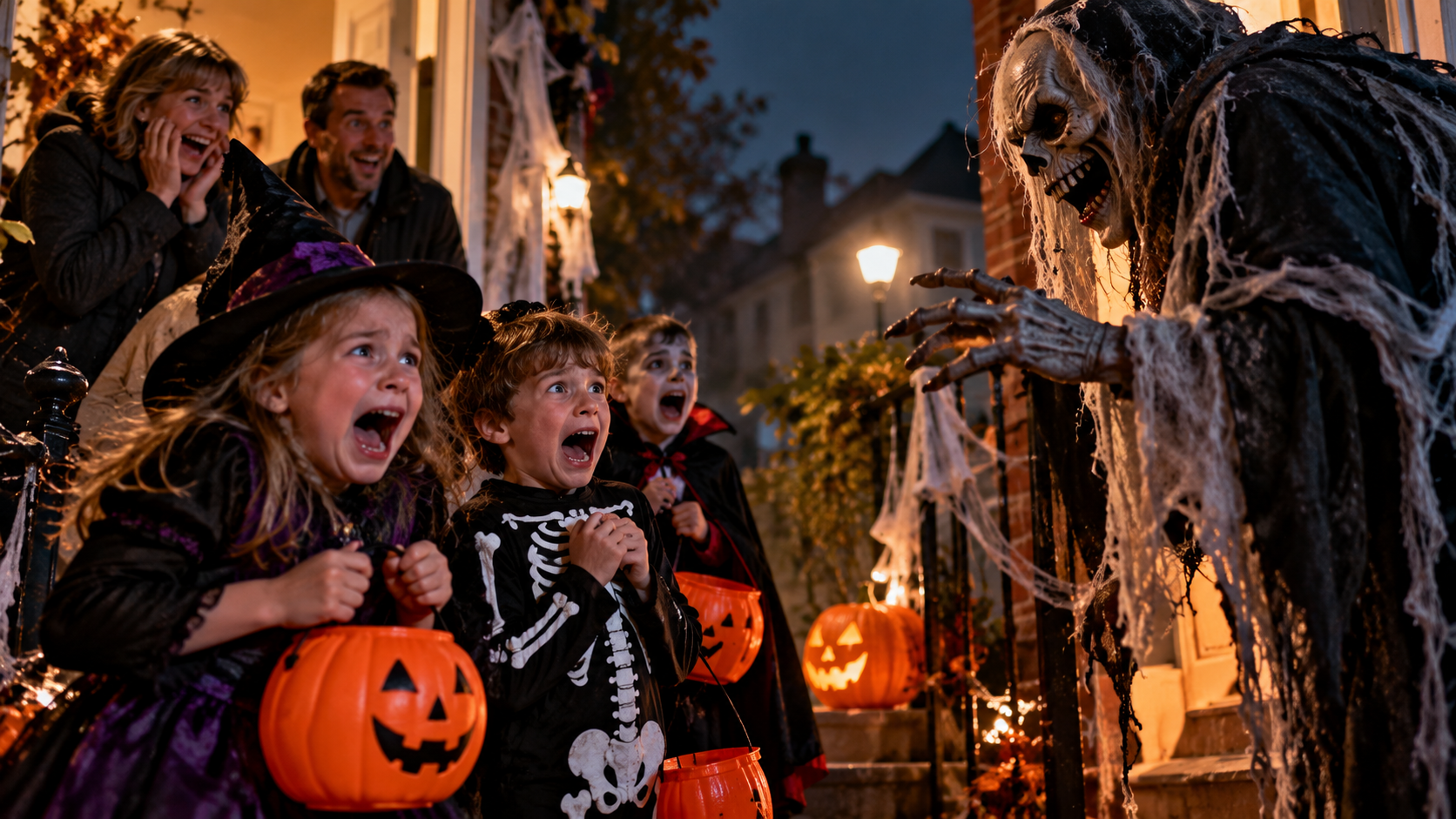

Halloween is supposed to be fun. We dress children as monsters, surround them with images of death, and encourage them to visit places designed to frighten them. But have we ever stopped to ask why frightening children should be considered entertainment?
Psychology offers some interesting answers. Fear is one of our most basic emotions. It evolved to help us detect and respond to danger. When we’re frightened, our brains activate systems that prepare us to escape or defend ourselves. Our heart rate may rise, our attention narrows, and our bodies prepare for action. But there’s a curious twist. Some people enjoy being frightened, provided they believe they’re safe. Psychologists call this *recreational fear*. Research at Aarhus University found that people visiting a haunted attraction enjoyed moderate levels of fear more than very low or very high levels.
There’s an important distinction here. These were people who had CHOSEN to visit a frightening attraction. But what about children? Young children don’t understand fear in the same way as adults. Their ability to distinguish fantasy from reality, and to manage strong emotions, is still developing. Research by psychologist Joanne Cantor found that young children can be frightened by seeing disturbing images, even when those images depict things that couldn’t possibly exist. Telling a frightened child that something isn’t real probably won’t be enough to make the fear disappear. Yet Halloween places frightening images in shops, streets, schools and children’s own homes. Children may encounter them without choosing to do so. And parents can make matters worse when they mistake fear for excitement, dismiss distress, or encourage children to endure experiences they clearly dislike.
We should also remember that fear isn’t always over when the frightening event ends. Disturbing images can remain in memory and, in some cases, they lead to nightmares or anxiety. That doesn’t mean that EVERY frightening Halloween experience causes lasting harm. The evidence doesn’t support that. But it does mean that we shouldn’t assume an experience is harmless simply because ADULTS intend it to be fun.
There is a profound ethical difference between helping a child explore fear in a safe, supportive setting and exposing them to frightening experiences for someone else’s amusement. Perhaps Halloween tells us something rather uncomfortable about adult behaviour. We spend much of the year teaching children that we will protect them from things that frighten them. Then, for one night in October, we seem to think that deliberately frightening them is something to celebrate. Isn’t that a rather strange message to send?
Leave a Reply
You must be logged in to post a comment.