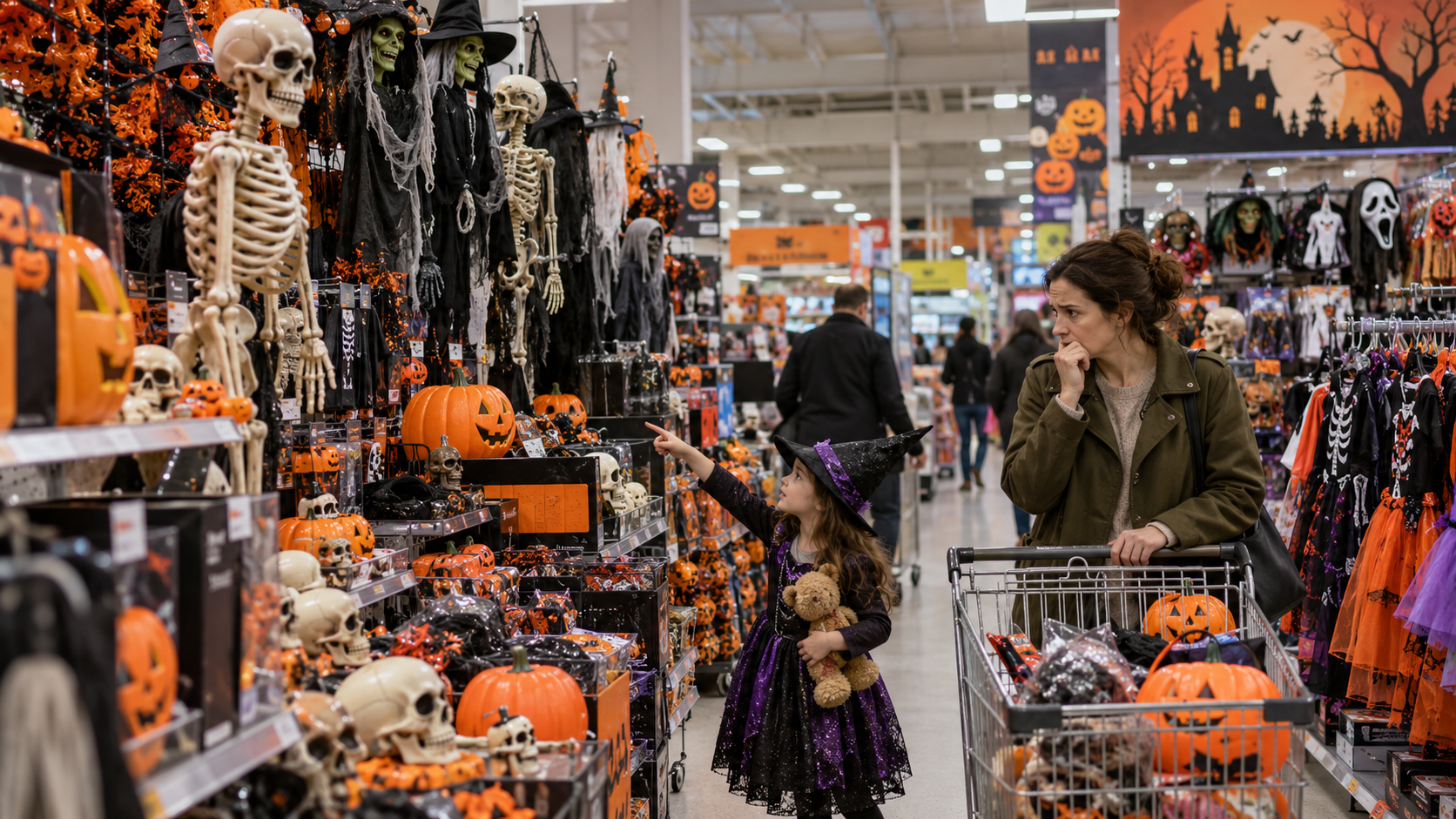

Every October, our shops fill with plastic skeletons, witches, pumpkins, costumes and themed sweets. Halloween seems to get bigger every year. But here’s something you might find surprising.
According to a YouGov survey in 2025, more than half of British adults don’t celebrate Halloween. And eight out of ten think it has become more commercialised. So why has Halloween become such a major retail event when so many people have little or no interest in it?
Part of the answer lies in how commercial marketing exploits human psychology. We tend to judge what is normal by looking at what other people appear to be doing. Psychologists call this social conformity. When shops, schools, social media and our neighbours promote Halloween, they create the impression that everyone is taking part. And that impression can become a form of social pressure. Parents, in particular, face a difficult choice. Their children see costumes, parties, and decorations all around them. They want to join in. And few parents want their children to feel excluded.
This is where commercial interests can exploit a basic human need: the desire to belong. Businesses don’t have to persuade us that Halloween has any real value. They simply need to make us feel that we’re missing something if we don’t take part. And the more people participate, the stronger that pressure can become.
There’s another problem, though. Halloween is no longer just a single evening. The commercial season now extends across much of October, with an ever-growing range of products, many of which have little use beyond the event itself. That raises questions about waste, consumption and the environmental cost of goods (often cheap, unsustainable plastics sourced from thousands of miles away) that may be thrown away after a few hours.
Of course, some people enjoy Halloween. But enjoyment doesn’t mean that we should ignore how commercial interests are shaping our choices. We should be asking who benefits from turning a modest seasonal custom into a major consumer event? Because when businesses create a sense of social obligation, then sell us the products we need to meet that obligation, we ought to question just how freely we’re choosing.
Perhaps the most disturbing thing about modern Halloween isn’t the costumes or the frightening images. It’s how easily commercial interests can make us feel that we need something we never wanted in the first place.
Leave a Reply
You must be logged in to post a comment.