

Hannah Arendt’s work has renewed force because it links themes that now tend to be treated apart: loneliness, solitude, critical thinking, autonomy, and political action. Read together, they raise a useful question. What sort of person can think and act with independence in a culture that places such high value on constant connection?
Arendt’s political thought begins with the shared world. In The Origins of Totalitarianism, she examined the social and political conditions that allowed totalitarian movements to take hold. Among these was what she called loneliness. She did not mean ordinary solitude. She meant a deeper form of social and political disconnection in which people lose their place in a common world and their capacity to act with others (Arendt, 1951).
That distinction matters because current debate often blurs solitude, isolation and loneliness. They are not the same. A person can spend long periods alone without distress. Another may live among many people and still feel lonely. Solitude can also be chosen and may support thought, reflection and creative work.
This is where Arendt becomes useful to present concern about loneliness and mental health. Persistent loneliness does correlate with poorer mental and physical health, but the direction of cause remains complex. Depression may lead to withdrawal. Loneliness may deepen depression. Both may arise from wider conditions such as insecure work, poor housing, bereavement, poverty or loss of community space.
The political risk appears when a social condition becomes redescribed as a defect within the person. Instead of asking what has happened to the social world, policy may ask how the individual can become more connected. The decline of public space, local services and stable work can then fade from view.
Arendt would also have resisted the idea that connection is always good and solitude always suspect. In The Life of the Mind, she described thinking as a silent dialogue with oneself. Thought requires some distance from the group. It interrupts routine, received opinion and obedience (Arendt, 1978).
This connects closely with critical thinking. In education, critical thinking often means weighing evidence, testing claims, spotting weak arguments and examining assumptions. Arendt gives it a wider moral and political role. Thinking means refusing to let custom, bureaucracy or group pressure replace judgement.
Her account of Adolf Eichmann remains central here. In Eichmann in Jerusalem, Arendt used the phrase “the banality of evil” to describe the way grave harm can arise through routine, obedience and a failure to think through the moral meaning of one’s acts (Arendt, 1963). Her point was not that evil was trivial. It was that people may commit terrible acts without deep ideological passion if they stop judging for themselves.
Critical thinking, in this sense, is not just an academic skill. It is a political capacity. It allows a person to ask: What am I being asked to accept? What evidence supports this? What assumptions have I absorbed? What would count against my present view?
Solitude can support that process because it creates distance from social pressure. Yet solitude alone is not enough. A person who withdraws completely can become trapped inside their own beliefs. Arendt therefore balances solitude with plurality.
Drawing on Kant, she stressed the value of what she called an “enlarged mentality” – the attempt to consider an issue from standpoints other than one’s own (Arendt, 1982). Good judgement therefore needs both independence and exposure to difference.
The sequence might be expressed like this:
solitude → reflection → critical judgement → autonomy → public judgement → political agency.
Autonomy here does not mean living without others. It means retaining the power to form a judgement that is not simply borrowed from one’s peers, employer, party, institution or social group. A highly connected person may possess little autonomy if those connections mainly reinforce existing norms. A person who spends much time alone may retain strong political agency if solitude supports thought that later enters public life.
This leads directly to documentary photography.
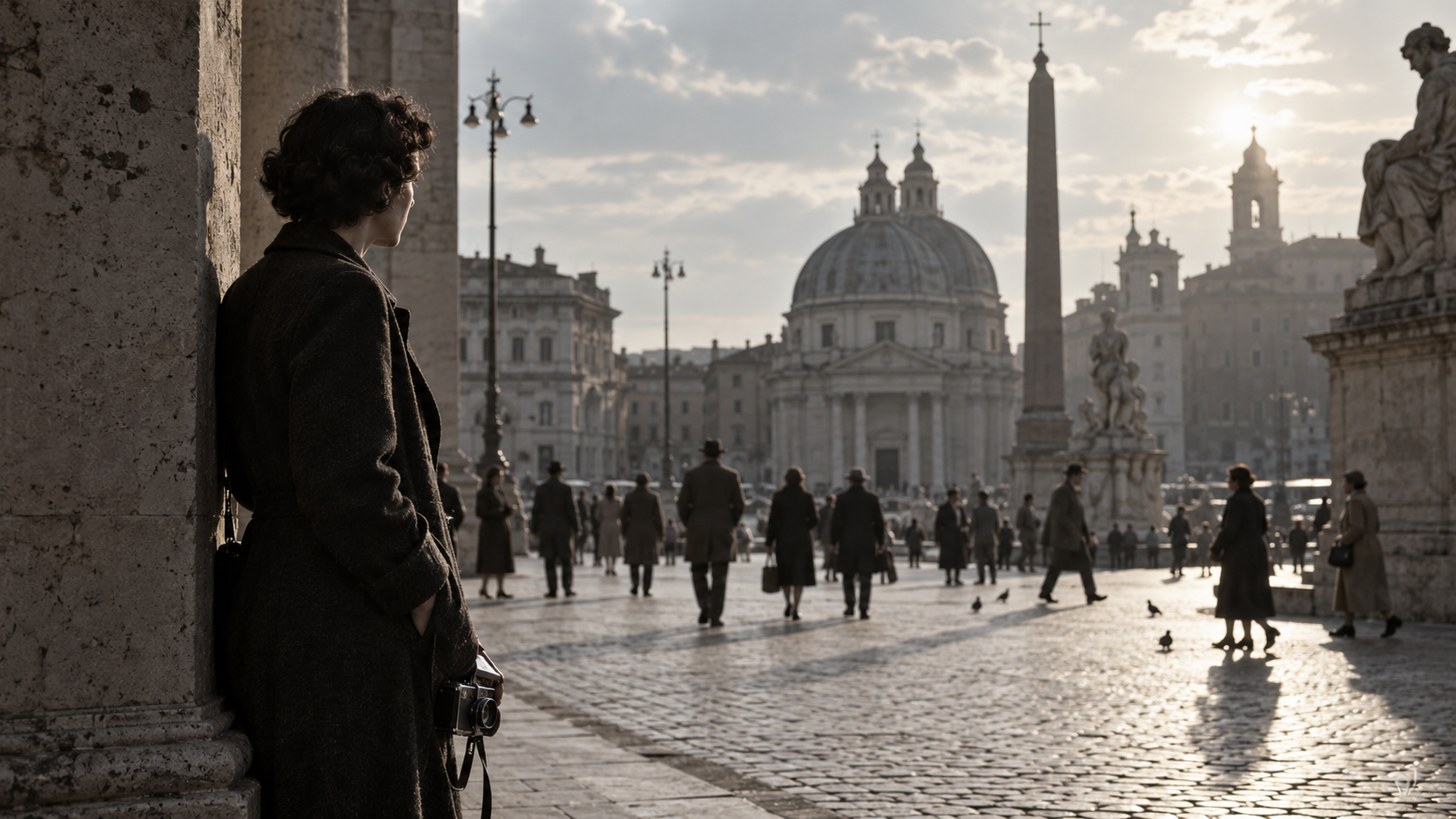
Documentary photographers occupy an unusual place in this scheme because they move between observation and public action. They stand partly inside the world they record and partly apart from it. They watch, select, interpret and then return what they have seen to a public audience.
The documentary photographer therefore resembles Arendt’s judging spectator. The photographer decides where to stand, what to notice, what to exclude, when to press the shutter, which image to publish, how to caption it and how to place it within a sequence. Each decision carries an interpretation.
Documentary photography is therefore not neutral observation. It is a form of judgement made visible.
That gives photographers a special relation to critical thinking. Serious documentary work should ask not only what is happening, but how the photographer knows what is happening. Whose account has been accepted? What evidence might disturb it? What assumptions shape what the photographer notices? What meaning may the image acquire once removed from the scene in which it was made?
The photographer also exercises autonomy when resisting the expected image. Editors, campaign groups, institutions, audiences and photographic traditions all carry assumptions about what a subject should look like. Critical documentary work may begin by refusing those assumptions.
Yet the photographer’s political role should not be exaggerated. Photographs rarely produce political change by themselves. They enter a field of competing claims, institutions and interests. A stronger claim is that documentary photography contributes to the shared world in which political judgement becomes possible.
It can make people, places and conditions available for public attention. It can disturb familiar ways of seeing. It can reveal contradiction. It can bring something into view that had previously remained unseen, ignored or abstract.
The political force of documentary photography may therefore lie less in telling people what to think than in making something available to think about.
That returns us to Arendt’s central concern. Politics depends on a common world that people can see, discuss and judge from different positions. Documentary photography can help build that common world, but only if it remains sceptical about its own authority.
Every photograph says, in effect, “look here”.
It also says, whether the photographer admits it or not, “not there”.
A healthy public culture therefore needs both association and distance. It needs spaces where people can act together, but it also needs people who can stand apart, examine what they are being asked to accept, and return with a judgement of their own.
For photographers, this may be one of the strongest reasons to take critical thought seriously. Documentary work begins before the shutter is pressed and continues long after the image is made. It asks the photographer to move between solitude and society, between observation and interpretation, and between private judgement and public speech.
References
Arendt, H. (1951). The origins of totalitarianism. Harcourt Brace.
Arendt, H. (1963). Eichmann in Jerusalem: A report on the banality of evil. Viking Press.
Arendt, H. (1978). The life of the mind. Harcourt Brace Jovanovich.
Arendt, H. (1982). Lectures on Kant’s political philosophy (R. Beiner, Ed.). University of Chicago Press.
Sliwinski, S. (2011). Human rights in camera. University of Chicago Press.
Leave a Reply
You must be logged in to post a comment.