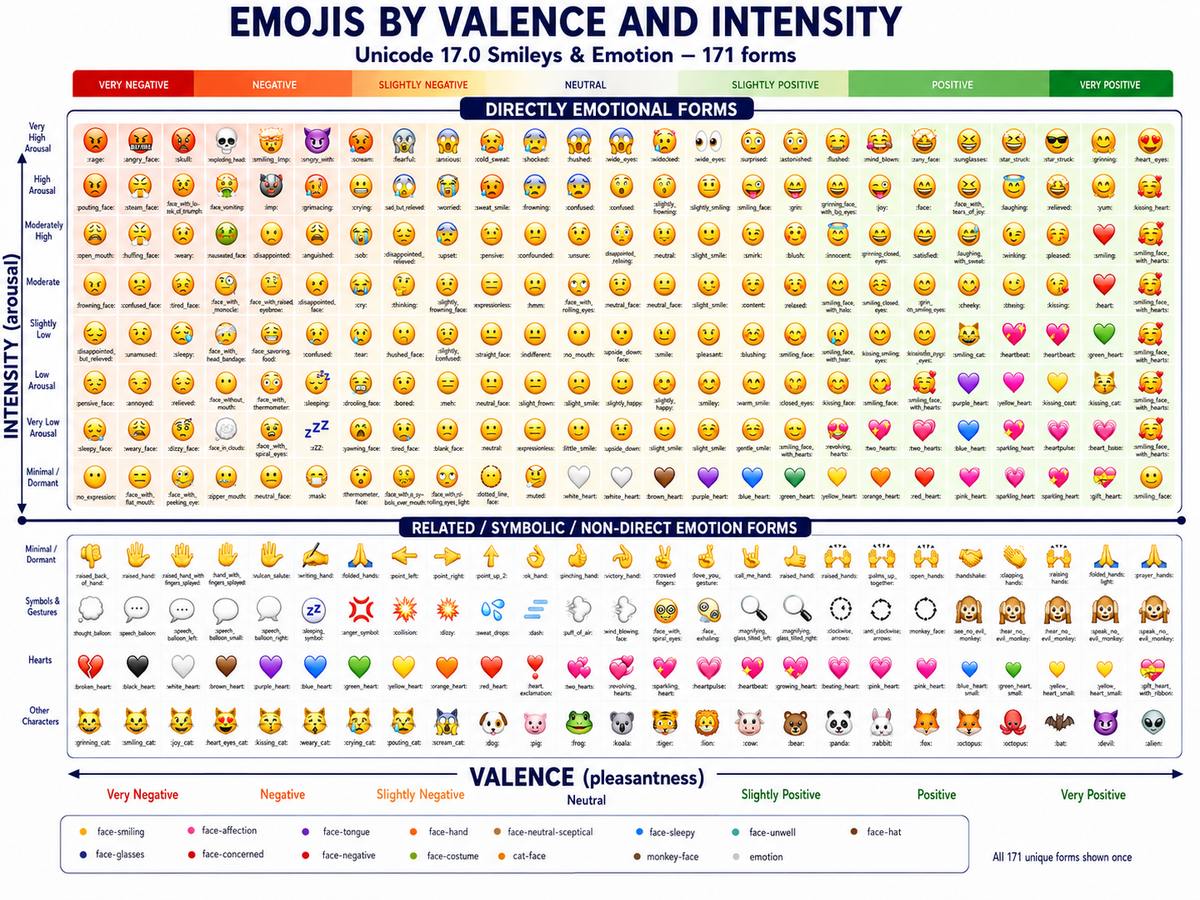

The chart arranges the 171 forms in Unicode 17.0’s Smileys & Emotion group along two psychological dimensions. The horizontal axis represents valence, moving from unpleasant or negative states on the left to pleasant or positive states on the right. The vertical axis represents intensity, or arousal, moving from low activation at the bottom to strong activation at the top. Faces linked with rage, fear, shock, joy, or excitement therefore appear higher than forms linked with calm, tiredness, or mild contentment.
The lower section separates direct facial expressions from related signs, such as hearts, gestures, speech symbols, animals, and other figures. These forms may convey emotion, but they do not depict an emotional facial state in a direct way.
Each emoji has a text label showing the word or phrase that might appear between colons, such as :smiling_face:. These labels draw on the English CLDR short names and keywords published with the Unicode Emoji Charts. However, colon-based prompts are not fixed by Unicode. Slack, GitHub, Discord, WordPress, and other systems may use different shortcodes for the same emoji.
Unicode supplies the list, order, names, and classifications. The placement by valence and intensity is an interpretive psychological scheme rather than an official Unicode classification.
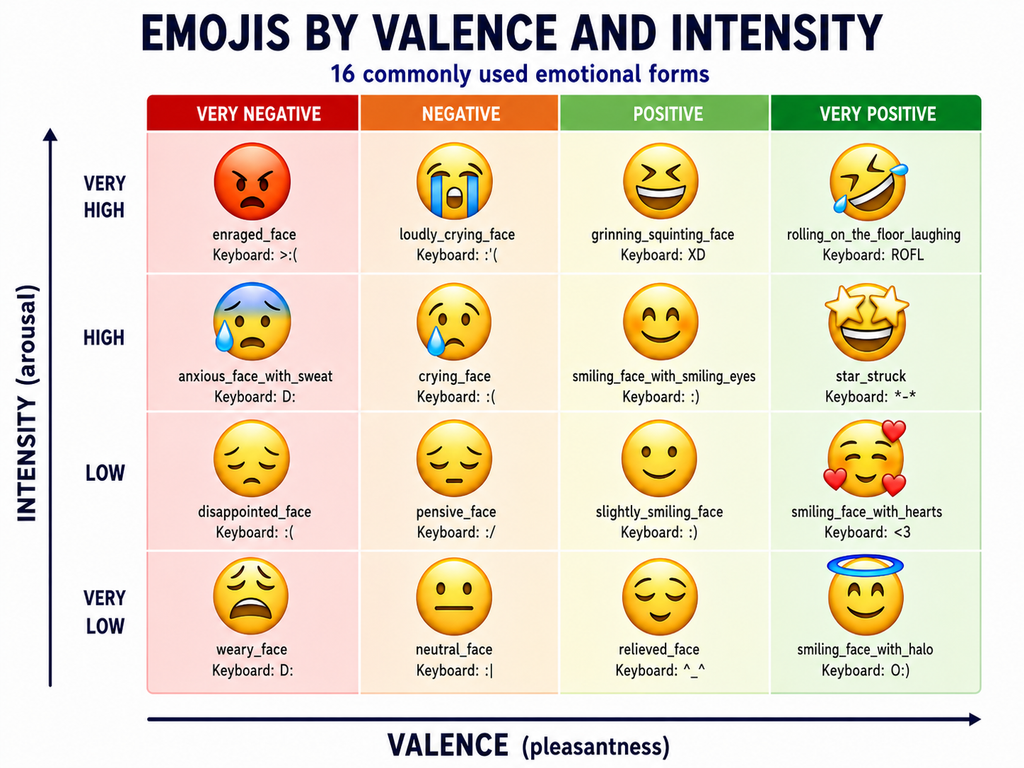
Just in case the idea of expanding your emoji vocabulary to 171 is a bit too much, here’s a simpler form.
Leave a Reply
You must be logged in to post a comment.